Soursop vs Neem Tea for Diabetes: Which Is Best, and Can Diabetics Drink Them?
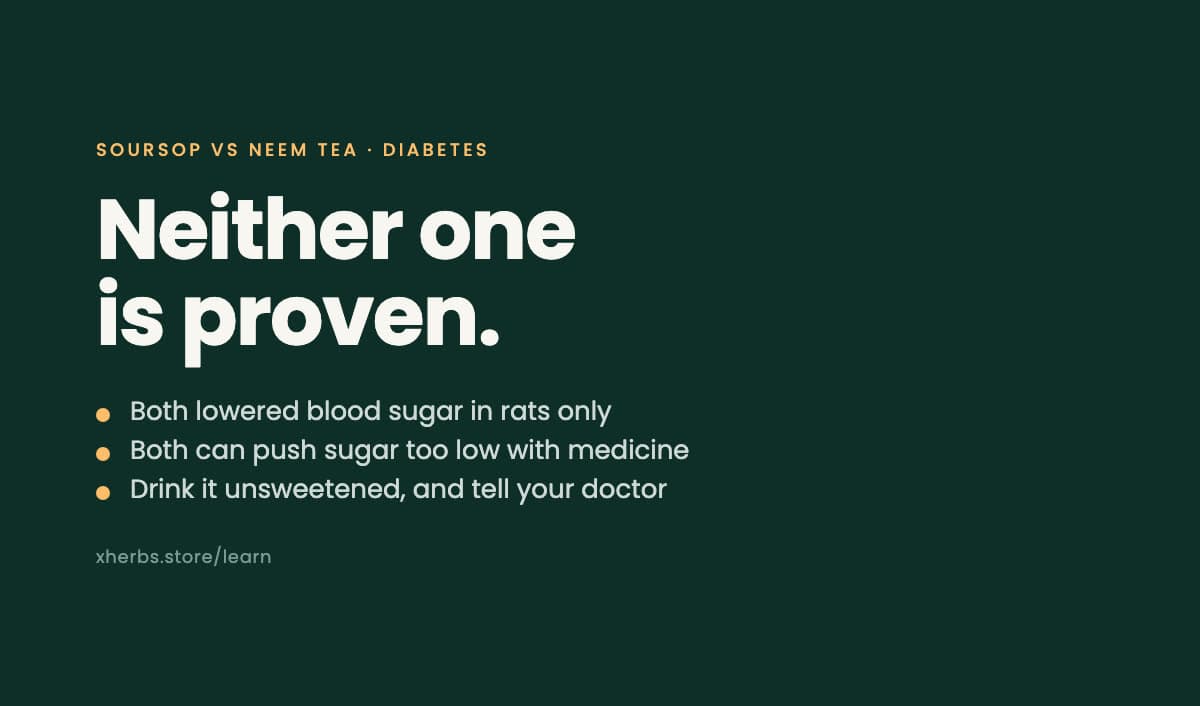
Neither soursop tea nor neem tea is proven to treat diabetes in people, and neither replaces metformin, insulin or your doctor. Both lowered blood sugar in animal studies. Neem also has a few small, low-quality human studies, which soursop does not. The practical difference is safety: both can push blood sugar too low when you also take diabetes medicine, neem is far more bitter and has more interaction and liver concerns at high doses, and soursop carries a nerve-toxicity concern with heavy long-term use. If you have diabetes and want a caffeine-free herbal tea, pick the one you tolerate, drink it unsweetened, keep your doctor informed, and check your sugar. Below is the evidence for each, whether a diabetic person can drink them, whether to mix them, and what actually controls diabetes.
Never stop or reduce your diabetes medicine for a tea. Uncontrolled blood sugar damages eyes, kidneys, nerves and the heart, usually without warning signs. Herbal teas can be an addition, with your doctor's knowledge, not a replacement.
Soursop vs neem tea for diabetes at a glance
- Human evidence: soursop has none. Neem has a few small, weak studies suggesting a modest effect.
- Animal evidence: both lowered blood sugar in diabetic rats, using concentrated extracts, not tea.
- Taste: soursop is mild and slightly earthy. Neem is intensely bitter.
- Main risk with diabetes medicine: both may add to its effect and cause low blood sugar. Neem is the stronger concern.
- Other safety: soursop is linked to nerve problems with heavy long-term use and is avoided in pregnancy and Parkinson's. Neem is linked to liver and kidney stress at high doses, is avoided in pregnancy and when trying to conceive, and neem products must be kept from children.
- Caffeine: neither has any.
- Verdict: neither is "best". Neither treats diabetes.
Soursop tea for diabetes: what the evidence says
Several studies in diabetic rats found that soursop (graviola, Annona muricata) leaf extract lowered blood sugar and improved some markers. These used extracts far stronger than a cup of tea, and no study has tested soursop tea in people with diabetes. Soursop leaves also contain annonacin, a compound linked to nerve and movement problems in people who consume large amounts over years. So the sensible limits are no more than two cups a day, with regular breaks, and no soursop at all in pregnancy, breastfeeding, Parkinson's disease, or kidney or liver disease. Full details in soursop leaves side effects.
Neem tea for diabetes: what the evidence says
Neem (Azadirachta indica, dogonyaro) is one of Nigeria's most-used bitter leaves. Animal studies show neem leaf extract lowers blood sugar, and a handful of small human studies, mostly from India, reported modest reductions in blood glucose. Those studies were small, short and not well controlled, so they are suggestive, not proof. Neem's bigger issue is interactions: it can add to the effect of diabetes drugs and cause hypoglycaemia, and high doses have been linked to liver and kidney stress. Neem should be avoided in pregnancy and by couples trying to conceive, because animal studies show anti-fertility effects, and neem oil is dangerous to young children. Our full guide is neem leaves: benefits, uses and safety.
So which is best for diabetes?
Neither, in the sense people mean. No herbal tea manages diabetes. If your doctor is happy for you to drink an herbal tea alongside your treatment:
- Soursop is the easier daily tea: milder, pleasant, and fine in moderation for most adults. Its limits are two cups a day and regular breaks.
- Neem is for people who can stand the bitterness and are not on medicines it interacts with. Short courses, not daily for months.
- Neither if you are pregnant, breastfeeding or trying to conceive.
Whichever you choose, drink it without sugar or honey. A sweetened "diabetes tea" defeats the purpose.
Can a diabetic person drink soursop leaf tea?
Yes, in moderation, if you follow four rules. Tell your doctor, because soursop may lower blood sugar further on top of your medicine. Drink it unsweetened. Keep to one or two cups a day with breaks. And check your blood sugar more often in the first week, watching for shakiness, sweating, hunger, confusion or a fast heartbeat, which are signs of low blood sugar. If any appear, stop the tea and treat the low sugar as your doctor has taught you.
Is neem tea good for diabetics?
It may lower blood sugar, which is exactly why it needs care. Combined with metformin, insulin or sulfonylureas, neem can push sugar too low. If your doctor agrees, use weak, short courses (a cup a day for a couple of weeks, then stop), monitor your sugar, and stop at once if you feel dizzy or shaky. Avoid it entirely if you have liver or kidney disease, are pregnant, or are trying to conceive.
Can you drink soursop and neem leaves together?
People do, and posts promoting "neem and soursop" teas are common. We don't recommend combining them if you take diabetes medicine, because you are stacking two sugar-lowering herbs on top of a drug that already lowers sugar. If you are not on medication and want to try, use one weak cup, not two strong ones, and check your sugar. The combination is also very bitter.
How to make each tea, unsweetened
- Soursop: boil 5 dried leaves in one cup of water for 10 to 15 minutes, steep 10 minutes, strain. No honey. Full method in how to prepare soursop leaves.
- Neem: boil 5 or 6 dried leaves in one cup of water for 5 to 10 minutes, strain. Start with a weak brew; it is very bitter. A squeeze of lemon helps more than sugar would.
What actually controls diabetes
- Taking your medicine every day, even when you feel fine.
- What you eat: smaller portions of rice, bread, swallow and sugary drinks; more vegetables, beans and protein.
- Daily movement: a brisk 30-minute walk lowers blood sugar more reliably than any tea.
- Checking your sugar and keeping clinic appointments, including eye and kidney checks.
- A healthy weight and not smoking.
If you also have high blood pressure, note that soursop may lower that too. See soursop leaves for high blood pressure.
Where to buy soursop and neem leaves
If your doctor is comfortable with you drinking either tea, use clean, whole leaves with nothing added, so you know what is in your cup. xHerbs sells both, grown in Nigeria with no added preservatives or chemicals: Dried Soursop Leaves, 100 whole leaves, ₦4,000 and Dried Neem Leaves, 1 pack, ₦5,000, delivered across Nigeria with delivery options shown at checkout. For other options, see where to buy soursop leaves in Nigeria.
Frequently asked questions
Which is better for diabetes, soursop or neem?
Neither is proven to treat diabetes. Neem has a few weak human studies and more interaction risk; soursop has animal studies only and a milder taste. Both can lower blood sugar further on top of medicine.
Can a diabetic person drink soursop leaf tea?
In moderation, unsweetened, with your doctor informed and your sugar checked. One or two cups a day with breaks.
Is neem tea good for diabetics?
It may lower blood sugar, so it needs your doctor's approval and monitoring. Use weak, short courses and stop if you feel shaky or dizzy.
Can soursop tea replace diabetes medication?
No. No herbal tea replaces diabetes treatment. Stopping medicine for a tea is dangerous.
Does soursop tea raise blood sugar?
Unsweetened soursop tea contains almost no sugar. Adding honey or sugar does raise it, so drink it plain.
Bottom line: Soursop tea and neem tea both lowered blood sugar in animal studies, neem has a few weak human studies, and neither treats diabetes or replaces medicine. Soursop is the milder daily tea, neem the bitter short-course one, and both need your doctor's knowledge, no added sugar, and sugar checks because they can push levels too low. Buy clean, whole, Nigerian-grown leaves with nothing added, like xHerbs soursop and neem leaves.