Soursop Leaves Side Effects: Kidneys, Nerves, Medicines and Who Should Avoid Them

Soursop leaf tea is drunk safely by many Nigerians in moderation, but it does have real side effects. The most common are nausea or stomach upset, and dizziness from lower blood pressure. The most serious concern is the nervous system: soursop contains annonacin and related compounds, and heavy, long-term use has been linked to Parkinson-like movement problems. Animal studies at high doses also point to possible kidney and liver stress. Soursop can interact with blood pressure and diabetes medicines, and it isn't suitable in pregnancy. Here are soursop leaves' side effects, who should avoid them, and how to drink soursop tea more safely.
Safe-use basics: no more than two cups a day, regular breaks, and no long-term heavy use. Avoid it in pregnancy, while breastfeeding, for children, and if you have Parkinson's, kidney disease or liver disease. Check with your doctor if you take blood pressure or diabetes medicine.
Common side effects
- Nausea, vomiting or stomach upset, especially with strong brews or on an empty stomach.
- Dizziness or light-headedness, because soursop may lower blood pressure.
- Shakiness or sweating in people on diabetes medicine, because soursop may lower blood sugar.
Soursop and the nervous system
This is the side effect researchers take most seriously. Soursop leaves, fruit and seeds contain annonaceous acetogenins, including annonacin. In lab studies these compounds damaged nerve cells. In the Caribbean island of Guadeloupe, researchers linked heavy, long-term consumption of soursop and related plants with a form of atypical parkinsonism, a movement disorder. That is why the advice is to:
- avoid large amounts over long periods
- take breaks
- avoid soursop entirely if you have Parkinson's disease or another movement disorder
Stop drinking it and see a doctor if you notice tremor, stiffness, slowness or balance problems.
Soursop leaves side effects on the kidneys
People often ask whether soursop leaves are bad for the kidneys. Animal studies giving high doses of soursop leaf extract for weeks have reported changes in kidney and liver function. Human data is very limited. Moderate tea drinking hasn't been shown to damage healthy kidneys, but if you have kidney disease, avoid soursop tea, or speak to your doctor first. The same caution applies to liver disease.
Soursop and medicines
- Blood pressure medicines: soursop may lower blood pressure further. See soursop leaves for high blood pressure.
- Diabetes medicines: soursop may lower blood sugar further. If you have diabetes, read soursop vs neem tea for diabetes before you start.
- Sleeping pills or sedatives: soursop may add to drowsiness. See soursop tea for sleep.
Tell your doctor or pharmacist if you drink soursop tea regularly.
Who should avoid soursop leaves
- Pregnant women: safety isn't established, and some animal research suggests effects on the womb.
- Breastfeeding mothers
- Children
- People with Parkinson's disease or movement disorders
- People with kidney or liver disease
- People with low blood pressure
Dried soursop leaves side effects vs fresh
Drying doesn't make soursop safer or riskier in any proven way. The same cautions apply. The main extra risk with dried leaves is poor storage: damp, mouldy or musty leaves should be thrown away. See fresh vs dried soursop leaves.
A note on soursop and cancer
You will see claims online that soursop leaves cure cancer. Some lab and animal studies show effects on cancer cells, but there is no good evidence that soursop treats cancer in people, and the nerve-toxicity concerns mean high doses are not harmless. Never delay or replace cancer treatment with soursop. Talk to your oncologist about any herbal products you are considering.
How to drink soursop tea more safely
- Use the pack directions: 5 dried leaves per cup, boiled 10 to 15 minutes. Use more water for a milder tea. See how to prepare soursop leaves.
- Drink no more than two cups a day.
- Take breaks, for example a week on and a few days off.
- Drink it after food if it upsets your stomach.
- Buy clean, properly dried leaves from a seller you can trust.
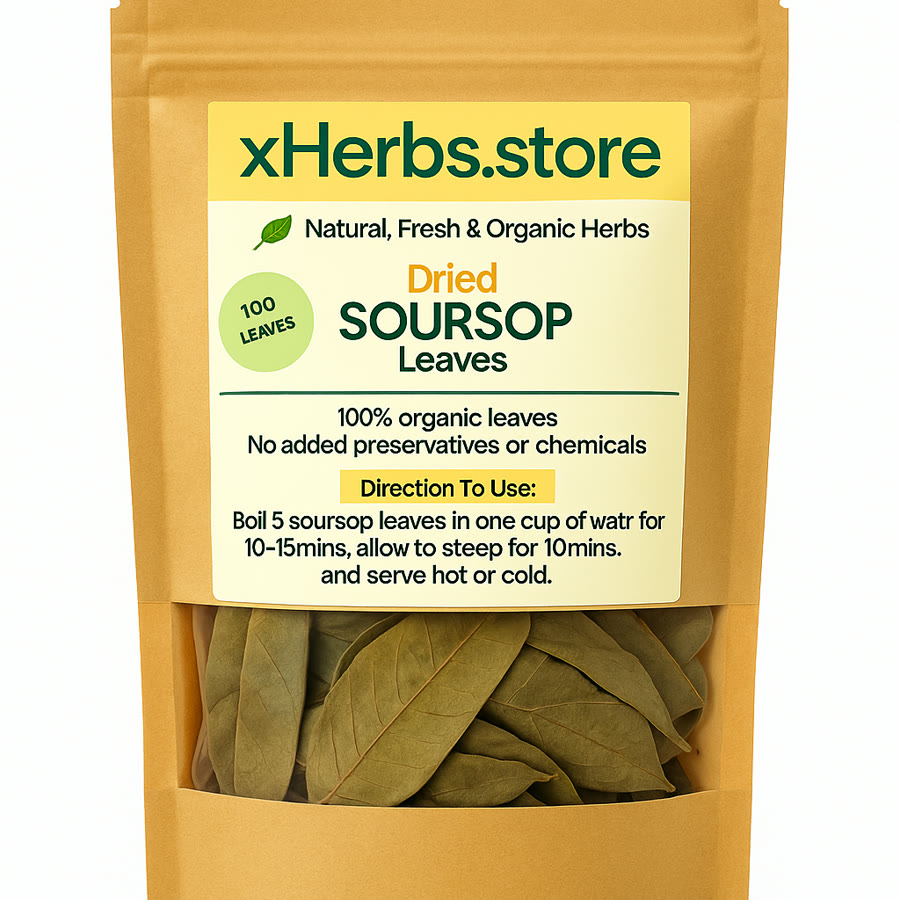
Choosing soursop leaves you can trust
xHerbs Dried Soursop Leaves are made in Nigeria and come as 100 whole leaves with no added preservatives or chemicals, so you can see exactly what you're brewing and control the strength. ₦4,000 on xherbs.store. For the traditional uses, see our soursop leaves benefits guide.
Frequently asked questions
What are the side effects of soursop leaves?
Nausea, dizziness from lower blood pressure, and low blood sugar in people on diabetes medicine. Heavy long-term use has been linked to nerve and movement problems.
Are soursop leaves bad for the kidneys?
Animal studies at high doses showed kidney and liver changes. People with kidney or liver disease should avoid soursop tea or ask a doctor first.
Can I drink soursop tea every day?
Not in large amounts for long periods. Keep to two cups a day at most and take regular breaks.
Is soursop tea safe in pregnancy?
No. Its safety in pregnancy isn't established. Avoid it while pregnant and breastfeeding.
Does soursop cure cancer?
No. There is no good evidence that soursop treats cancer in people. Don't use it in place of medical treatment.
Bottom line: Soursop leaf tea can cause nausea, low blood pressure and low blood sugar, and heavy long-term use is linked to nerve problems. Keep to two cups a day with breaks, and avoid it in pregnancy, Parkinson's, kidney and liver disease. Ask your doctor if you take blood pressure or diabetes medicine. If you do drink it, use clean, Nigerian-made leaves with nothing added, like xHerbs Dried Soursop Leaves.