How to Know Original Castor Oil in Nigeria: 7 Checks Before You Pay
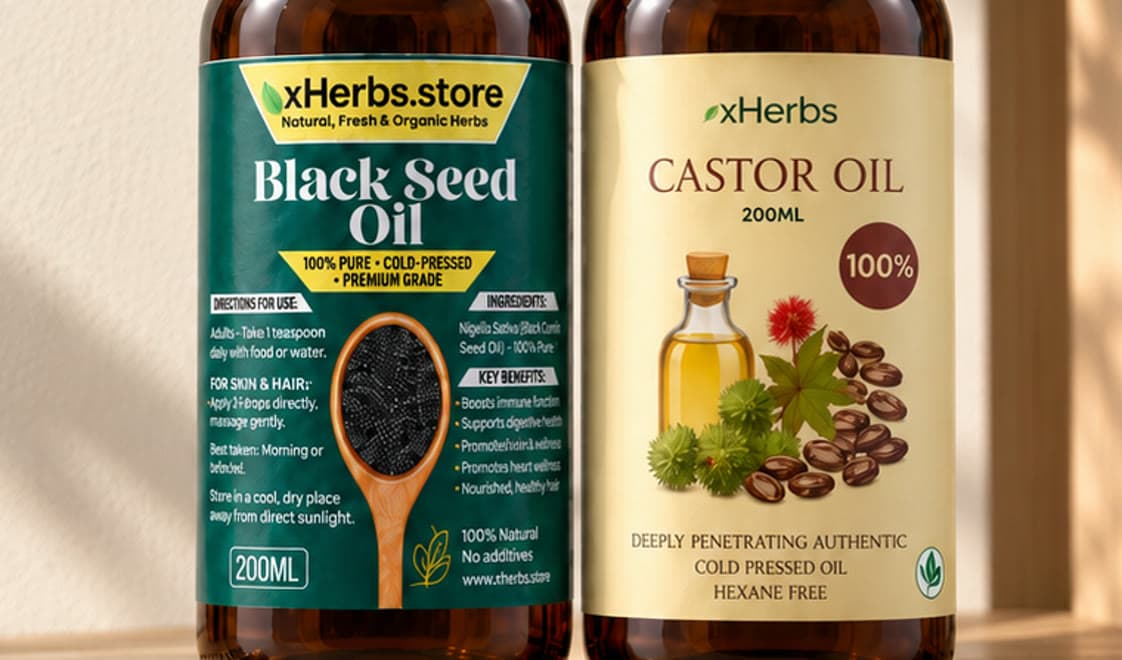
To know original castor oil in Nigeria, check seven things before you pay: a sealed, properly labelled bottle, a single ingredient (Ricinus communis seed oil), "cold-pressed" or "hexane-free" on the label, a very thick texture, a pale yellow to golden colour, a mild smell, and a seller you can trace. No single check is perfect, but together they rule out most diluted and decanted oil sold in Nigerian markets. Here is how to do each one, and what the xHerbs bottle stocked at Elo-Ruks Naturals in Abule Oshun, Lagos shows on its label.
Why fake castor oil is common in Nigeria
Castor oil is in steady demand for hair, edges, skin and castor oil packs, and it costs more to make than common cooking oils. That gap makes it tempting to stretch. The most common problems are:
- Dilution with thinner, cheaper oils, which makes the oil runnier.
- Decanting big drums into reused water or soft-drink bottles, with no label, date or source.
- Old or rancid oil stored in heat and sunlight.
- Look-alike labels on blends that are mostly mineral oil and fragrance.
7 checks for original castor oil
- Sealed bottle, proper label. The cap should be unbroken, and the label should show the product name, volume and seller or brand. If someone fills a bottle from a jerrycan in front of you, you have no way to know what is in it.
- One ingredient. Pure castor oil has a single ingredient: castor oil, sometimes written as Ricinus communis seed oil. If the label lists mineral oil, paraffin, fragrance or "blend", it isn't pure castor oil. It may still be a fine hair product, but it isn't what you are paying castor oil prices for.
- "Cold-pressed" and "hexane-free". Cold-pressed means the oil was pressed mechanically from the seeds. Hexane-free means no chemical solvent was used to pull out extra oil. Industrial castor oil is often solvent-extracted and refined. It still works as castor oil, but if you want the least processed oil, look for both phrases.
- The thickness test. This is the most useful home check. Castor oil is one of the thickest plant oils there is. Tip the sealed bottle upside down and watch: real castor oil moves slowly, like honey or thick syrup. If it runs like groundnut or vegetable oil, it has probably been mixed with something thinner.
- Colour and clarity. Cold-pressed castor oil is pale yellow to golden and clear. Very dark brown oil is normal only for Jamaican black castor oil, which is made from roasted seeds. Cloudiness, visible layers or floating particles in a "cold-pressed" bottle are warning signs.
- Smell. Good castor oil smells faint, slightly nutty or earthy. A strong perfume suggests a fragranced blend. A sharp, sour or "old kitchen oil" smell suggests the oil has gone rancid.
- A seller you can trace. Buy from a fixed shop or an online store you can go back to. For branded imported products, you can look up the NAFDAC registration number on NAFDAC's Greenbook. For small-batch oils, ask the seller where the oil comes from and how it was made. A good seller will have an answer.
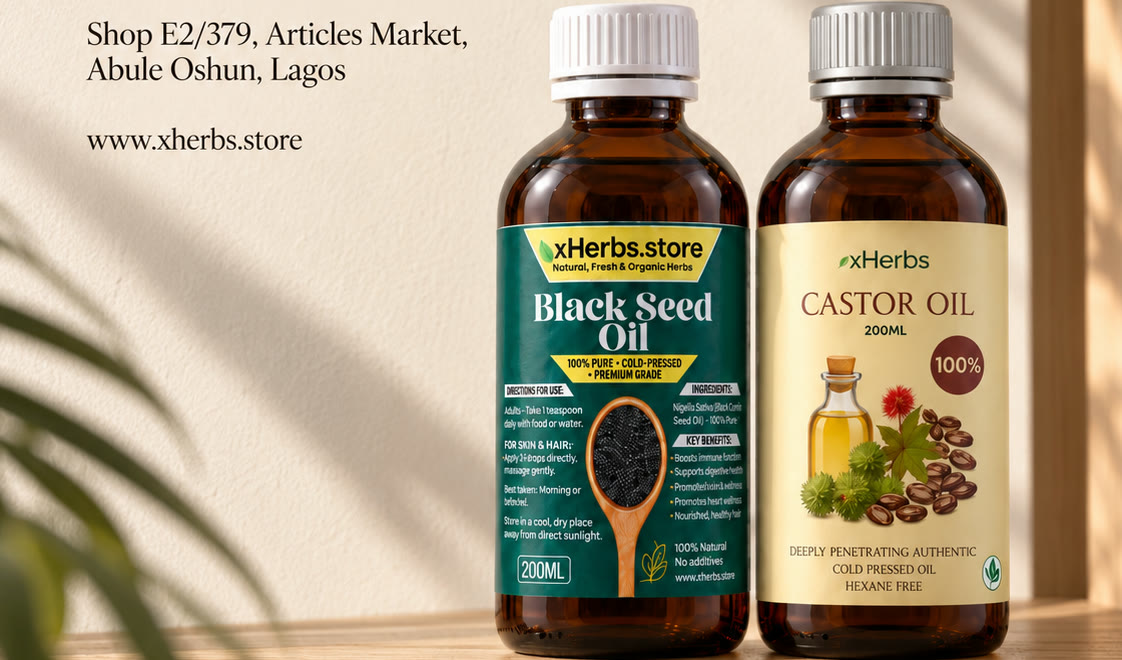
What the xHerbs castor oil label shows
Here is how the xHerbs bottle measures up against those checks:
- Bottle: 200ml dark amber glass with a silver screw cap.
- Label: cream label reading "xHerbs Castor Oil, 200ml, 100%".
- Process: "Deeply penetrating authentic cold pressed oil, hexane free" printed on the label.
- Where to buy it: in Lagos at Elo-Ruks Naturals, Shop E2/379, Articles Market, Abule Oshun, or online at xherbs.store.
Do the thickness and smell checks on any bottle you buy, including ours. A good product should pass easily.
Home tests that don't work well
- The fridge test: some people say pure castor oil will set solid in the fridge. Castor oil stays liquid at normal fridge temperatures, so this doesn't tell you much either way.
- The burn test: setting oil on fire tells you nothing reliable about purity, and it is a burn risk.
- Price alone: expensive doesn't mean pure, and cheap doesn't always mean fake. Compare price per ml, and see our castor oil price in Nigeria guide for normal ranges.
Pharmacy (BP) castor oil vs cosmetic castor oil
Castor oil sold in pharmacies and labelled BP (British Pharmacopoeia) is made to a standard for internal use as a short-term laxative, under a pharmacist's or doctor's advice. Cosmetic castor oil, including xHerbs castor oil, is sold for external use on hair, skin and massage. Neither is "fake". They are made for different jobs. Don't drink cosmetic castor oil.
Frequently asked questions
How do I know if castor oil is original?
Check that it is sealed and labelled, lists only castor oil, says cold-pressed (ideally hexane-free), pours very slowly, is pale yellow to golden and clear, smells mild, and comes from a seller you can trace.
What colour is original castor oil?
Cold-pressed castor oil is pale yellow to golden. Jamaican black castor oil is dark brown because the seeds are roasted. That is normal for JBCO, not a sign of a fake.
Is thick castor oil original?
Thickness is one of the best signs. Real castor oil is far thicker than cooking oils. Runny oil sold as castor oil has likely been diluted.
What does hexane-free castor oil mean?
It means no hexane, a petroleum-based solvent, was used to extract the oil. Hexane-free castor oil is usually cold-pressed.
Where can I get original castor oil in Lagos?
Elo-Ruks Naturals, Shop E2/379, Articles Market, Abule Oshun, Lagos stocks sealed xHerbs cold-pressed, hexane-free castor oil in 200ml bottles. It is also available at xherbs.store.
Bottom line: Original castor oil is sealed, has one ingredient, is labelled cold-pressed or hexane-free, pours slowly like honey, is pale yellow to golden, and smells mild. In Lagos, you can check all of this on the xHerbs Castor Oil 200ml bottle at Elo-Ruks Naturals, Shop E2/379, Articles Market, Abule Oshun.