Gorontula Side Effects: Sugar, Mould Toxins, Pregnancy and Who Should Avoid It
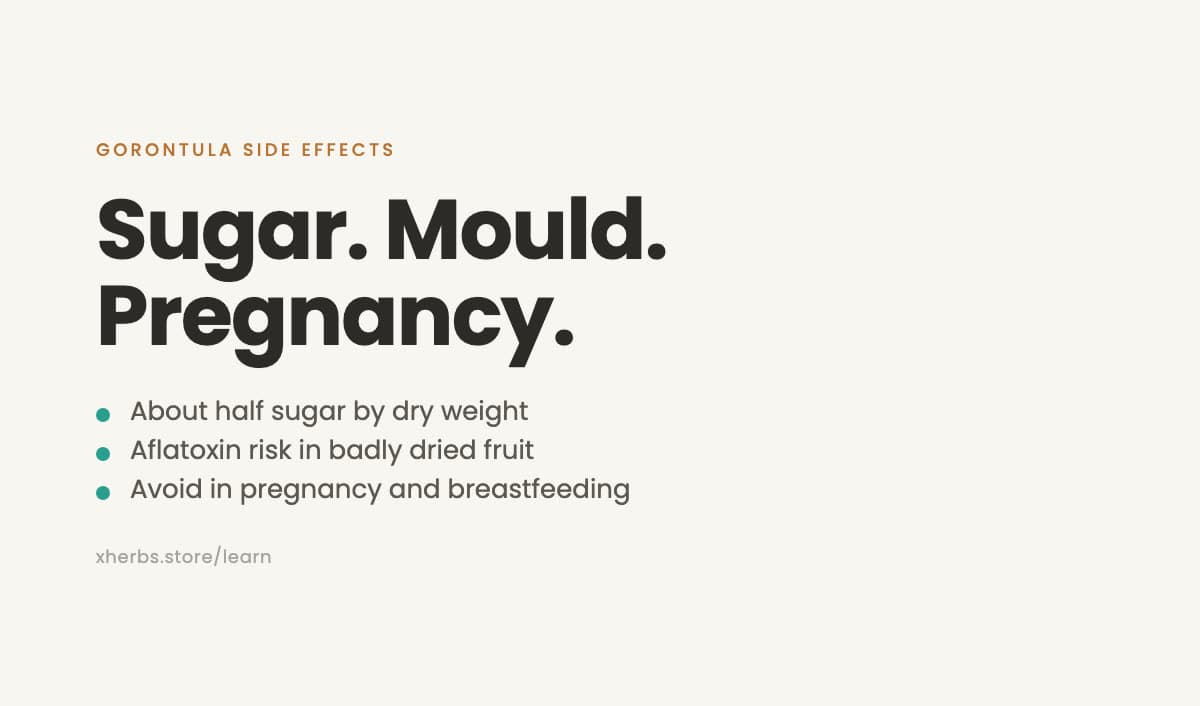
Gorontula (goron tula, snot apple) is a food, and most people who eat a few fruits or take a spoon of syrup have no problems. But it is not risk-free, and the side effects that matter are not the ones most blogs list. The real concerns are pregnancy (avoid it), sugar (about half the dried fruit), mould toxins in badly dried fruit, and heavy long-term use, which the best animal study warned against. There are also open questions about its active compounds. Below is every goron tula side effect and caution, sorted by how well it is supported, plus who should avoid it altogether.
Common, mild side effects
- Stomach upset, bloating or loose stools, especially with large amounts. The fruit is very high in fibre and sugar.
- Sticky teeth. The pulp is a sugary gum. Rinse or brush after chewing.
- Headache or nausea are reported on blogs, with no studies behind them. If it happens, stop.
Sugar
Analyses of the dried pulp find that roughly half its dry weight is sugar (glucose, fructose and maltose). Syrups add dates and honey on top. If you have diabetes or prediabetes, or you are watching your weight, treat goron tula and its syrup as a sweet, not a supplement, and count it. Rat studies hinting at a blood-sugar benefit used concentrated extracts, not the sugary fruit.
Mould and aflatoxin: the risk nobody mentions
This is the best-documented risk. Goron tula is a sticky, sugar-rich fruit that is dried for sale, and if it is dried slowly or stored damp it grows mould. A study of fruit sold in markets in Zambia found aflatoxin (a mould toxin linked to liver damage and liver cancer) averaging 11 micrograms per kilogram, above that country's legal limit of 10, and far above the European limit for dried fruit of 4. In laboratory tests, this fruit produced more aflatoxin than any other wild fruit the researchers tested. Nigerian researchers have also isolated mould from rotting Tula fruit.
What to do:
- Buy fruit or powder that is properly dried, sealed and from a seller you can trace.
- Throw away any fruit that is split, insect-damaged, musty, discoloured or soft.
- Store it dry and sealed. See how to store goron tula and spot bad fruit.
A properly processed powder, dried to a low moisture level and sealed, removes most of this risk, which is the strongest honest argument for powder over loose market fruit.
Pregnancy and breastfeeding: avoid
- Pregnancy: there is no safety data for the fruit. The plant's roots are traditionally used to start labour, and root extract makes uterine muscle contract in laboratory tests. Nobody knows whether the fruit shares that effect. Avoid it, and if you are trying to conceive, stop it as soon as you might be pregnant.
- Breastfeeding: no data at all. Avoid.
- Children: no data. Keep it to an occasional food, and never give the hard seeds.
Heavy, long-term use
The 2026 rat study that found better sperm and testosterone also warned that high doses over long periods "may cause negative effects on liver and testis". A separate two-week rat study found a liver enzyme (ALT) rose about two and a half times at the highest dose, even though the extract was judged "not toxic" overall. Food amounts, with breaks, are the sensible pattern. Daily high doses for months are not.
Fruit vs root: a warning about "mixed herbs"
A 28-day rat study of goron tula root extract found liver inflammation and scarring. That was the root, not the fruit, but some sellers mix goron tula with roots, barks and other herbs in "fertility blends". Buy single-ingredient fruit or powder, so you know what you are taking.
An open question: gossypol
A computer-modelling study suggested that gossypol, a compound found in the cotton family that goron tula belongs to, may be behind some of its effects. Gossypol from cotton seed is a known male anti-fertility compound at high doses. No one has measured how much, if any, is in the fruit. Until that is known, men trying to conceive shouldn't take large daily amounts for months. See goron tula benefits for men.
Hormones and periods
Rat studies show goron tula changes hormones such as prolactin and progesterone. Blogs report heavier or earlier periods and breast tenderness in some women, without studies. If you have PCOS, endometriosis, fibroids, or take hormonal contraception, HRT or fertility drugs, tell your doctor before using it regularly, and stop if your cycle changes. See goron tula benefits for women.
Kidney stones
Oxalates have been reported in the fruit. If you have a history of kidney stones, keep goron tula to small amounts and drink plenty of water.
Seeds and choking
The fruit is a woody capsule with five hard seeds about a centimetre long. Don't swallow or chew the seeds. Chew the pulp slowly and spit the seeds out. The whole fruit is a choking hazard for young children and awkward for anyone with dentures, which is another reason many people prefer powder.
Unsourced claims
You will read that goron tula is "carcinogenic in excess", or that you must not exceed "10 fruits a day". We found no study behind either number. The general advice stands on its own: keep to food amounts.
Interactions
None are documented. In theory, it could add to the effect of blood-sugar-lowering medicines (watch for low sugar) and hormone treatments. Tell your doctor or pharmacist if you take it regularly.
Who should avoid goron tula
- pregnant and breastfeeding women
- young children (and never the seeds)
- people with liver disease, until more is known
- people with diabetes who can't fit the sugar into their plan
- anyone with a known allergy to it, or who reacts after eating it
Ask a doctor first if you have PCOS, fibroids, kidney stones, or take hormonal or diabetes medicines.
Frequently asked questions
What are the side effects of gorontula?
Mild stomach upset and sticky teeth are common. The real concerns are sugar, mould toxins in badly dried fruit, and heavy long-term use, which animal studies warn may affect the liver.
Is gorontula safe in pregnancy?
No. There is no safety data, and parts of the plant are traditionally used to start labour. Avoid it in pregnancy and breastfeeding.
Does gorontula syrup have side effects?
The same as the fruit, plus more sugar from dates and honey. Homemade syrup also spoils quickly if not refrigerated.
Is gorontula bad for the liver?
Food amounts have not been shown to harm the liver. High-dose, long-term use raised a liver enzyme in rats, and root extract damaged rat livers. Keep to moderate amounts and avoid root-containing blends.
Can gorontula cause kidney problems?
The fruit contains oxalates, so people with a history of kidney stones should keep amounts small.
Bottom line: Goron tula is safe for most adults in food amounts, but avoid it in pregnancy and breastfeeding, count its sugar, don't take high doses for months, skip products with roots mixed in, and only buy properly dried, sealed fruit or powder, because badly dried fruit can carry mould toxins above legal limits.